The internet has transformed the way people communicate. A conversation that once required a letter, phone call, or face-to-face meeting can now happen instantly through a smartphone or computer.
This convenience has created enormous opportunities. People can maintain relationships across countries, join communities based on shared interests, learn from people with different experiences, and communicate at almost any time.
Yet the growing sophistication of digital communication has also created a new challenge: how can people maintain genuine human connection in an online environment that increasingly revolves around algorithms, profiles, metrics, and carefully selected content?
The answer begins with authentic online communication.
Authenticity does not mean sharing every private detail or avoiding technology. It means creating digital interactions where people can communicate naturally, express themselves honestly, and focus on meaningful exchanges rather than simply performing for an audience.
What Is Authentic Online Communication?
Authentic online communication is interaction that feels genuine rather than heavily manufactured.
It can take many forms, including a thoughtful conversation between friends, a spontaneous discussion in an online community, a live video conversation, or a message where someone communicates an honest opinion without trying to create a particular public image.
The defining characteristic is not the platform.
It is the quality and intention behind the interaction.
A technically advanced application can still support authentic communication, while a simple forum can sometimes produce superficial conversations. Technology provides the environment, but people determine how meaningful the interaction becomes.
Why Modern Digital Communication Can Feel Less Personal
Many modern platforms are designed around public visibility.
Users may think about how many people will see a post, whether something will receive reactions, or how an image will influence their online identity. This can turn ordinary communication into a form of performance.
Algorithms can reinforce the effect.
When platforms continuously recommend content based on previous behavior, users can spend much of their time inside familiar information bubbles. They see similar opinions, creators, subjects, and formats repeatedly.
This creates convenience but can reduce opportunities for unexpected interaction.
The result is a digital environment that can feel highly connected while sometimes lacking the spontaneity associated with natural human conversation.
The Value of Spontaneous Conversations
Spontaneity is one of the most valuable characteristics of authentic digital interaction.
A conversation does not always need a carefully planned topic or a predefined audience. Sometimes the most memorable discussions happen because two people unexpectedly discover a shared interest.
This is one reason people are increasingly interested in digital experiences that encourage immediate interaction.
A spontaneous conversation can introduce someone to a new perspective, culture, language, hobby, or personal story. Even a brief exchange can provide an experience that feels more memorable than passively consuming another piece of content.
The unpredictability becomes part of the value.
Lessons From Early Internet Culture
The early internet provides an interesting example of this principle.
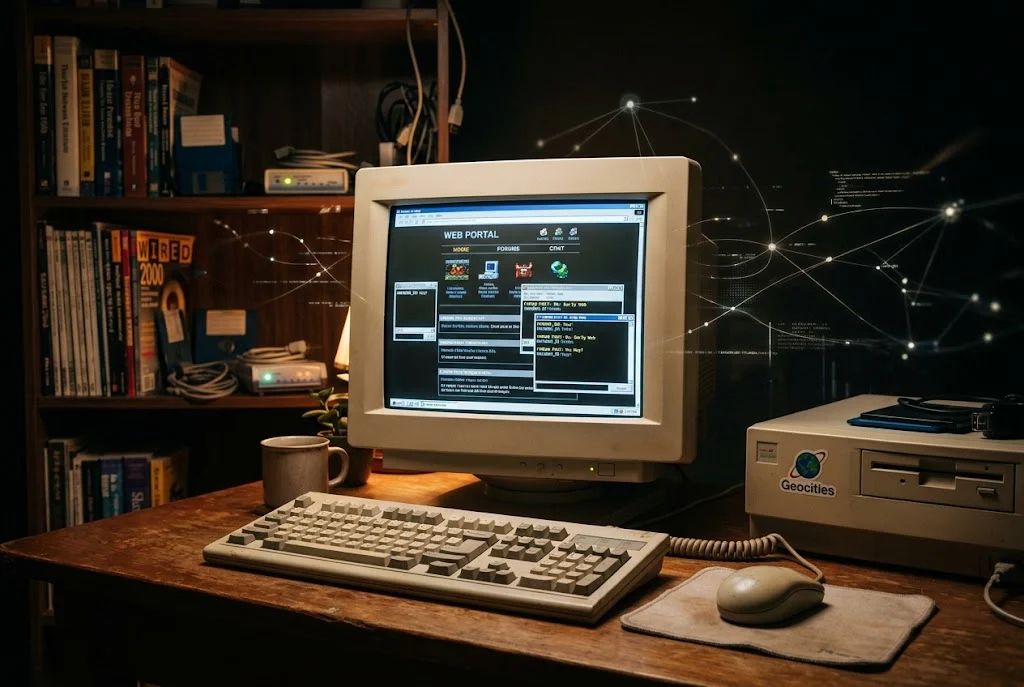
Before social media became the dominant way of being online, people often communicated through forums, chat rooms, message boards, blogs, and independent websites.
These spaces were not always polished or convenient, but they encouraged users to explore.
The renewed interest in early internet nostalgia reflects this broader fascination with an online environment where discovery and informal interaction played a much larger role.
Modern technology does not need to copy the old web exactly. Instead, it can borrow some of its best qualities while maintaining the speed, accessibility, and safety people expect today.
Authenticity and Online Identity
Online identity has become increasingly important.
Social networks allow people to present highly detailed versions of themselves. Photographs, biographies, professional achievements, interests, opinions, and personal updates can all become part of a carefully constructed digital profile.
There is nothing inherently wrong with presenting yourself positively online.
The problem appears when communication becomes entirely focused on maintaining an image.
Authentic interaction allows room for imperfection.
People can ask questions without pretending to know everything. They can disagree respectfully, change their minds, make jokes, or simply have an ordinary conversation without worrying about how every moment contributes to their public identity.
This flexibility can make online communication feel considerably more human.
Why Live Communication Can Feel More Genuine
Text-based communication remains essential, but live communication introduces additional signals.
During a real-time conversation, people can hear tone of voice, notice facial expressions, and respond immediately to another person’s reactions.
These small details can make an interaction feel more natural.
Live video communication also reduces the distance between participants. Two people may be thousands of kilometers apart, but the ability to see and hear one another can create a stronger sense of presence.
This does not guarantee a meaningful conversation. However, it provides more opportunities for natural interaction than a carefully prepared post or edited photograph.
Technology Should Support People, Not Replace Connection
The purpose of communication technology should ultimately be to make human connection easier.
Good digital tools reduce unnecessary barriers. They help people communicate across geographic boundaries, discover communities, exchange knowledge, and maintain relationships.
The technology becomes less useful when it encourages people to focus entirely on metrics instead of meaning.
This is why modern platforms increasingly need to consider the human experience behind their technical features.
Fast connections and attractive interfaces matter, but so do privacy, safety, accessibility, moderation, and the ability to communicate without unnecessary pressure.
The Role of Privacy and Boundaries
Authenticity does not require complete transparency.
Healthy online communication also involves understanding personal boundaries.
People should be able to decide what they want to share, who they want to communicate with, and when they want to end an interaction. Respecting those boundaries is particularly important when communicating with people who are not known personally.
The best digital environments allow users to remain authentic while maintaining reasonable control over their privacy.
This balance is likely to become increasingly important as communication technology continues to evolve.
Random Interaction and the Modern Web
Random and spontaneous communication can provide another way to create authentic experiences online.
Instead of communicating only with existing contacts, users can sometimes interact with people they would never encounter in their normal social circles.
These interactions can be especially interesting because there are fewer assumptions.
A stranger does not necessarily know your professional background, social reputation, or previous online activity. The conversation can therefore begin from a relatively neutral starting point.
Of course, responsible platform design remains essential. Moderation, reporting tools, privacy controls, and respectful behavior are important for maintaining a positive environment.
When those elements are present, spontaneous interaction can become an interesting alternative to highly curated social media experiences.
The Future of Authentic Web Communication
The future of digital communication will probably involve even more advanced technology.
Artificial intelligence may improve translation and accessibility. Faster networks will make high-quality video communication easier. New interfaces may create more immersive ways to interact.
But technological progress does not change the fundamental reason people communicate.
People still want to be understood.
They want to exchange ideas, laugh together, learn from one another, share experiences, and build relationships.
That means authenticity will remain important regardless of how sophisticated the technology becomes.
The challenge for developers and digital platforms will be finding ways to combine technical innovation with experiences that feel natural and human.
Creating Better Digital Experiences
Users also have a role to play in improving online communication.
Instead of treating every interaction as an opportunity to gain followers or attention, people can focus more on listening and responding thoughtfully.
Simple habits can make a difference:
- Ask genuine questions.
- Listen instead of immediately preparing a response.
- Respect different opinions.
- Avoid unnecessary personal information.
- Leave conversations that become uncomfortable.
- Give people room to communicate without judgment.
These principles apply whether someone is using a messaging application, online community, forum, or live video platform.
Authenticity is ultimately created through behavior rather than software alone.
A More Human Internet
The internet does not have to choose between technological progress and genuine communication.
Modern infrastructure can provide speed, security, accessibility, and convenience while still supporting human-centered interaction.
The growing interest in simpler and more spontaneous online experiences suggests that many users are looking for this balance.
Rather than abandoning modern platforms, the goal can be to create digital environments where technology becomes almost invisible and the conversation becomes the main experience.
This idea connects closely with the broader discussion around authentic web communication and the changing relationship between technology and human interaction.
Conclusion
Authentic online communication matters because technological connection and human connection are not always the same thing.
People can be surrounded by notifications, messages, profiles, and content while still wanting conversations that feel genuine.
The future of the web may therefore depend not only on faster technology but also on better digital experiences. Spontaneity, privacy, individuality, and meaningful conversation can all play a role in creating a more human internet.
Technology will continue to change, but the basic desire to communicate honestly and connect with other people is unlikely to disappear.